Specific Hypotheses Deriving from the DNE Model
Because our DNE model of heroic leadership portrays a system in flux as a result of crisis, we offer in this section a brief summary of the key features of the model along with specific hypotheses that derive from it. Table 1 depicts the temporal ordering of the stages of phenomena that unfold in the DNE model. Stage 1 of our model describes heroism as a commodity in an implied exchange relationship, called the hero contract, between heroic leaders and recipients of heroic leadership. Next, in Stage 2, a crisis event introduces upheaval in the system causing dissatisfaction in the terms of the hero contract, shown in Stage 3. Note that recipients of heroism begin to give more of their main commodity, the hero label, to heroes in Stage 3, but this commodity is insufficient in addressing the growing inequity in the exchange relationship. In Stage 4, we witness social processes that give rise to formal and informal negotiations among all parties in the exchange, including administrative management in the hero industry. If the crisis is severe enough and long-term in duration, Stages 5 through 7 depict heroes in crisis attempting to survive the broken system and possibly escape from it. Formal and informal communications and negotiations are ongoing during these stages of personal and professional crises for heroic individuals.
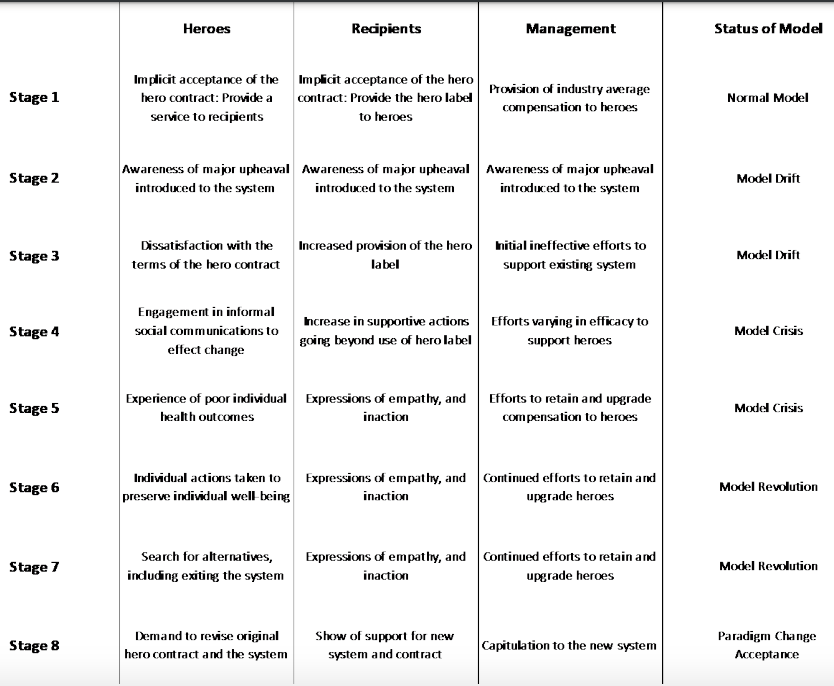 Table 1: Temporal ordering of stages in the Dynamic Negotiated Exchange model.a
Finally, if the system remains dysfunctional as the result of the major upheaval, Stage 8 describes the emergence of a new, healthier system that provides a more equitable and satisfying exchange for heroic leaders. This new model need not be a revolutionary departure from the old broken system, but it can be. If the new system represents radical change, the far-right column of Table 1 describes the entire unfolding of the DNE process as consistent with the stages of structural change as described by Thomas Kuhn (1970) in his iconic model of how scientific revolutions proceed. Kuhn argued that normal science is marked by a calm satisfying equilibrium and that a crisis emerges when anomalous discoveries do not fit the existing paradigm. When efforts to resolve the anomalies become too unwieldy and dissatisfying, a new revolutionary paradigm emerges that resolves the crisis.
From the preceding analysis and synthesis of past theories of heroism, exchange, negotiation, and responses to emergencies, we propose the following testable hypotheses for future research on the NDE model:
- Hypothesis 1: People hold an implicit belief in the hero contract. Specifically, people believe that an equitable exchange exists between heroes and beneficiaries of heroism such that heroes should perform great public service, and, in return, beneficiaries should laud them by using the hero label.
- Hypothesis 1a: This implicit belief in the hero contract is more likely to be strongly held by beneficiaries of heroism than by heroes themselves. Hypothesis 1b: Heroes are likely to accept or tolerate the implied hero contract in noncrisis conditions, but will reject the hero label and the hero contract during crises that place them in long-term conditions that endanger them and others.
- Hypothesis 1c: This same implicit belief in the hero contract will lead beneficiaries to rescind their hero designations if they perceive their heroes to be conducting themselves in a less than exemplary way. The rescinding of the hero label will be accompanied by extreme negative affect directed toward the former hero for violation of contract.
- Hypothesis 2: During a major societal crisis, recipients of heroism will be motivated to increase their application of the hero label to describe the attributes of heroic leaders working to ameliorate the crisis.
- Hypothesis 2a: The stronger the belief in the hero contract, the more likely recipients will increase their assignment of the hero label to heroes.
- Hypothesis 2b: The stronger the belief in the hero contract, the more strongly recipients will believe that the hero label is a form of payment for heroes.
- Hypothesis 2c: The stronger the belief in the hero contract, the more likely recipients will believe that using the label provides them with a psychological excuse for not taking steps to ease the burden of heroes.
- Hypothesis 2d: The more severe and long in duration the crisis, the more likely heroes will reject the hero label assigned to them by recipients.
- Hypothesis 2e: The more severe and the longer the duration of the crisis, the more likely heroes will perceive an inequity in their exchange relationship with recipients.
Hypothesis 3: Perceived inequities in the hero–recipient exchange will lead to dissatisfaction with the hero–recipient relationship. This should hold true for both heroes and recipients.
Hypothesis 4: Dissatisfaction from perceived inequities in the hero–recipient exchange will first manifest in informal social communications from heroes conveying the dissatisfaction.
Hypothesis 5: Initial informal social communications directed toward the public will promote public awareness of the issue, but also, to a lesser extent, a public interpretation that a problem exists and, to a much lesser extent, an assumption of responsibility from the public for solving the problem.
Hypothesis 6: There will be a positive relationship between the frequency in the number of informal social communications and overall awareness of the issue, an interpretation that a problem exists, and an assumption of responsibility for solving the problem.
Hypothesis 7: To the extent that informal social communications fail to effect change in the inequities in the hero–recipient relationship, heroes will engage in more formal communications with organizational and/or governmental leadership.
Hypothesis 8: Dissatisfaction felt by heroes that is not assuaged by informal and formal communications will lead to a significant increase in poor mental health outcomes for heroes in the form of burnout, PTSD, depression, anxiety, and suicide ideology.
Hypothesis 9: Dissatisfaction felt by heroes that is not assuaged by informal and formal communications will likely be accompanied by either an entire abdication of the hero role (the Great Resignation) or in the hero’s decision to continue performing heroic actions in a different group or organization.
- Hypothesis 10: Informal and/or formal social communications and negotiations between heroes and their organizational leaders, in response to dissatisfaction felt by heroes about inequities in their exchange relationship, may result in a restoration of equity in the form of the Great Upgrade or the Great Retention, both of which should assuage hero dissatisfaction.
These ten hypotheses (and subhypotheses) offer future investigators a start in their empirical endeavors to illuminate the rich psychological nuances of the DNE model. There are no doubt more subtle, and perhaps more overt, stages of the psychological exchange and behavioral exchange that are forever ongoing between our heroes and the beneficiaries of heroism. We offer these hypotheses as a guide to further work with an acknowledgment that we are no doubt failing to capture all the psychological elements of the hero–recipient exchange relationship.
Table of Contents
- Introduction
- Definitions of Heroism and Heroic Leadership
- Exchange Models of Leadership and Heroism
- Frontliners and the Hero–Recipient Exchange
- Dynamic Negotiated Exchange during Times of Crisis
- Specific Hypotheses Deriving from the DNE Model
- Summary and Concluding Thoughts
- References