CHAPTER FOUR: FINDINGS
Introduction
This study is an analysis of videos taken on January 6, 2021, around, nearby, and inside the United States Capitol building and posted to the social media platform Parler by participants of that event. Audio and visual analysis was conducted on 100 videos to determine what, if any, far right imagery and rhetoric was used by participants of January 6 as they recorded themselves and others. The videos represent a merging of cyber and real life spaces. The results of the analysis show the predominant imagery visible during the incident was pro Trump, followed by the American flag imagery. The results also show a distinct lack of imagery from far right groups that were known to be at the Capitol that day. Finally, the audio analysis provides a narrative window into the actions of the participants of January 6 as the cyber and real life space intertwined to become one space. The following sections examine the results of the visual analysis, followed by audio analysis, discussion of findings, and study limitations.
Analysis Findings
Of the 100 videos studied, most were recorded near the Capitol, followed by around the Capitol, and inside the Capitol. The following chart details the numerical breakdown:
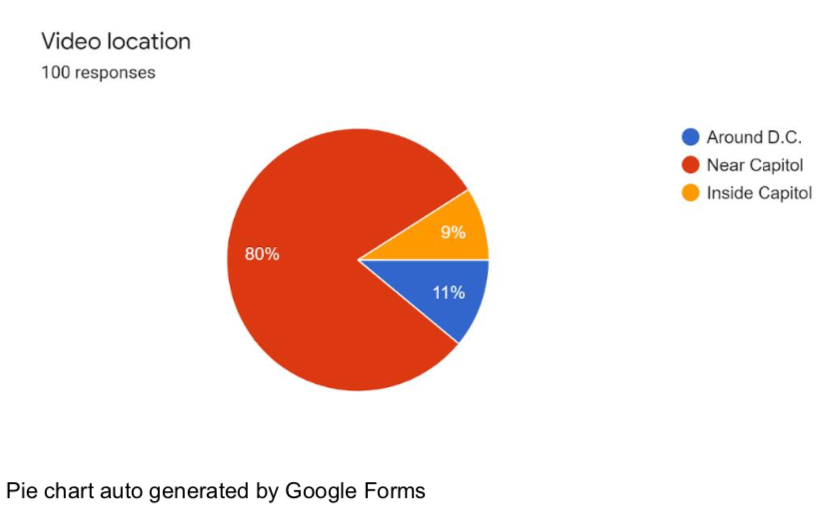 Figure 2. Video Recordings by Location
The full 500 videos posted by ProPublica (Groeger et al., 2021) also are majority near, followed by around, and inside which affirms the random sample as being representative as far as location.
Visual Analysis Findings
The visual analysis of the flags, garments, hats/beanies, and patches and pins shows pro Trump and American Flag designs to be the most prevalent imagery visible from the January 6 videos of the Capitol. The Gadsden Flag and the Betsy Ross flag were also popular images. Little far right imagery was easily spotted in the videos. Oath Keepers imagery made a small appearance, the Proud Boys, even smaller with just one sighting, as well as a few Kekistan flags (alt-right imagery), though the far right group with the greatest visible presence as far as imagery was America First.
The weather on January 6, 2021, in Washington, D.C was in the low 40s Fahrenheit between the hours of 12 PM and 6 PM. The weather likely influenced the prevalence of beanies, hats, and coats. The great majority of beanies and Make America Great Again (MAGA) hats appeared identical; perhaps many were bought at concession stands at the rally before the march to the Capitol. Overcoats covered many people’s shirts, leading to difficulty in seeing t-shirts for analysis. Patches and pins were also hard to see for the same reason in addition to the relatively unsophisticated software and computer used for this analysis. It was difficult to focus and zoom in on items as small as patches and pins, particularly given the crowd sizes in some of the video clips. Overall, as the figures below demonstrate, most imagery present on January 6, 2021, at the US Capitol was pro Trump and American flag related. This finding is reflective of the known agendas of the far right groups at the Capitol that day. While there was scant far right imagery, there was a lot of nondescript, camouflage and tactical gear. These were not categories analyzed in the study; however, they were noticeable, along with the lack of far right imagery that had been prevalent at other “Stop the Steal” related events leading up to the events at the Capitol on Jan. 6. It is also known from law enforcement arrests (Kunzelman & Durkin Richer, 2021) that far right actors both planned and executed attacks that day.
Table 1. Types of Imagery Shown on Hats and Beanies 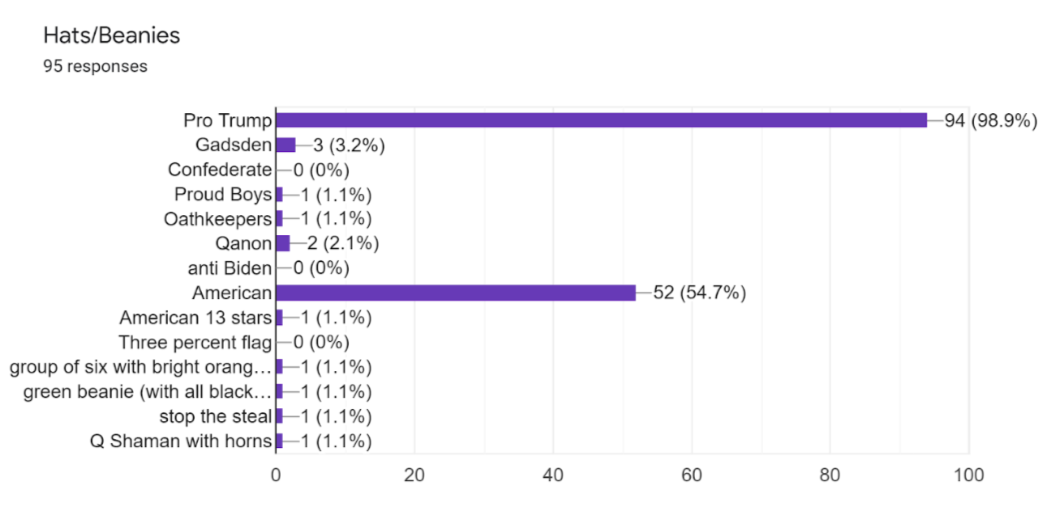
Table 2. Types of Imagery Shown on Flags 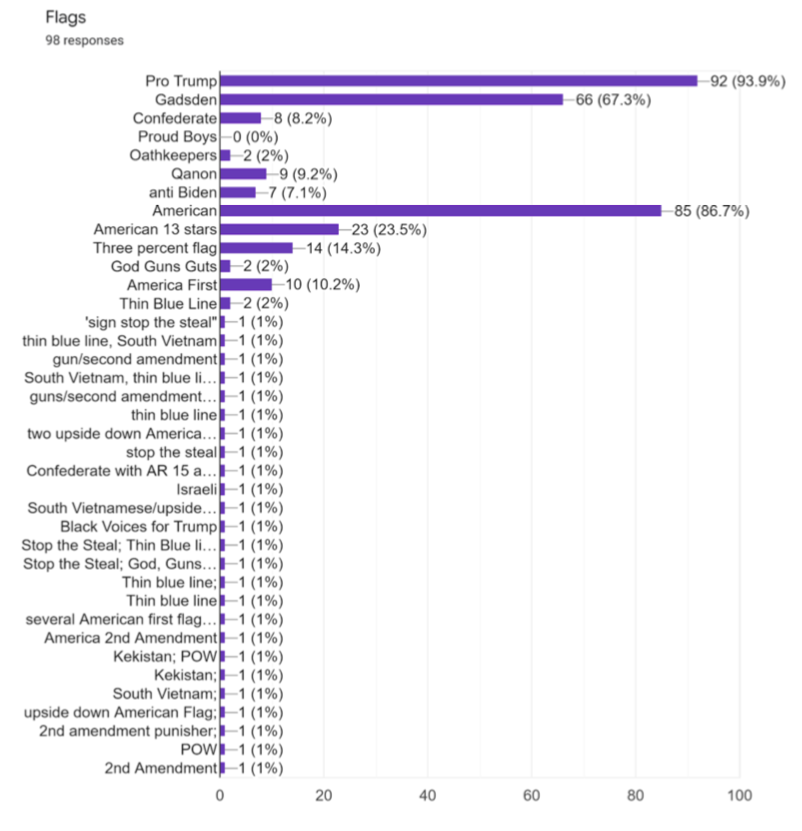
Audio Analysis Findings
Chants and songs could be heard throughout the video recordings of Jan. 6. The two most common chants were “USA!” and “stop the steal!” The National Anthem was sung a few times and the Pledge of Allegiance was recited. Some of the chants were only repeated by one or a few people, however they were clearly heard on the video, so they were recorded for this study. These chants and the narration, by people both in front of and behind the camera, reflect what are known to be the events of the day. Earlier in the day, between 1 PM and 2 PM, the audio analysis shows rhetoric surrounding the election and demands to “stop the steal” and “let us in,” by midway through the events, between 2 PM and 3PM, the tone and words changed to reflect the crowd knew the Capitol had been breached and shouts were heard to help, and videos were then filmed inside the Capitol, rather than just near or around. After 3 PM, some of the individuals inside the building are seen leaving, to cheers and congratulations, and law enforcement are observed arriving to reinforce the Capitol Police.
Table 3. Chants and Songs 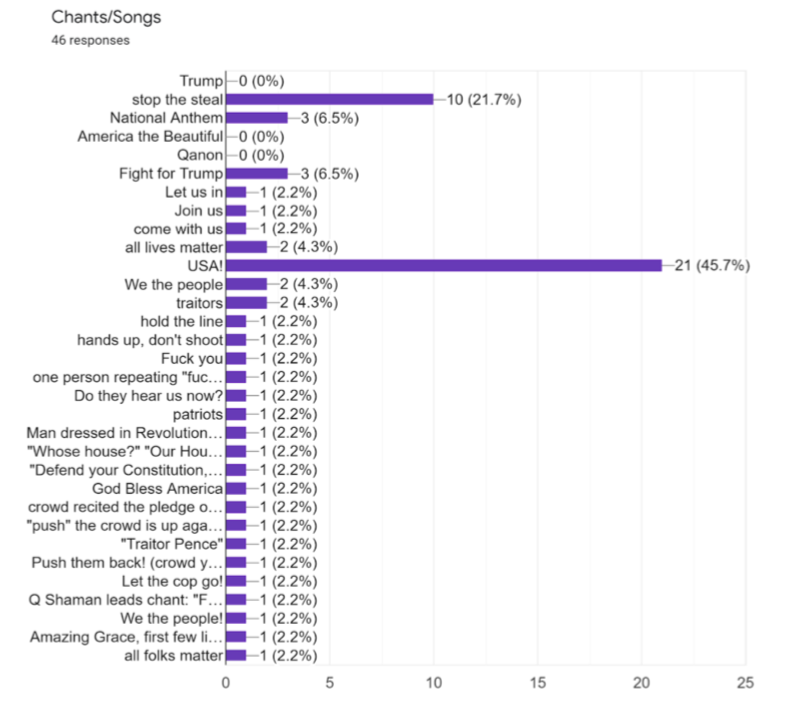
Video recorded at 12:59 PM (Groeger et al., 2021, video 12) near the Capitol shows a man standing on the steps yelling, “We already voted, and what have they done? They stole it! We want our fucking country back. Let’s take it…[unintelligible] come on, come on!” Throughout the clip are shouts by others: “stop the steal!” “let us in!” “join us!” “all lives matter” “USA!” and “we the people.” Seven minutes later, also nearby, a video shows the crowd pushing toward the building, and a man off camera can be heard saying, “People have taken over the Capitol building. Storming the walls and storming the Capitol. This is our house!” (Groeger et al., 2021, video 21). One minute later, at 1:07 PM, a video was posted from around the Capitol that showed Trump on the big screen telling the crowd at the “Save America” rally at the Ellipse that “if you don’t fight like hell, we won’t have a country anymore” (Groeger et al., 2021, video 24). The next three recordings cover about a thirty minute period between 1:07 PM and 1:35 PM. Various chants are heard: “traitors!” “hold the line!” “USA!” “hands up, don’t shoot!” and “fuck you!” along with one man who exclaims “It’s a fucking war zone out here boys!” (Groeger et al., 2021, videos 47, 53, 59). Far right figure Alex Jones appears on a video at 1:51 PM. He is holding a bullhorn and telling the crowd to relocate to the other side of the Capitol where he says there are permits for the event. He called the police “provocateurs” and told the crowd not to engage with the police and “give the system what they want” (Groeger et al., 2021, video 79).
At 2:01 PM, a man can be heard yelling during video 100, “They just breached it. They’re storming the Capitol. Hell yeah!” (Groeger et al., 2021). Videos filmed over the next ten minutes are full of people encouraging the Capitol attack. Various directions were given: “Whoo! Yeah! Yeah! Push forward!” “Fucking go! They need our help” (Groeger et al., 2021, videos 193, 196). Video 122 shows the crowd surging towards the building, and one man can be heard instructing them that “we need to have this area completely occupied. It’s an easy push forward!” (Groeger et al., 2021). A video posted a minute later captures a man breaking the windows of the Capitol building before being tackled by the police. Some in the crowd shout to “leave him alone” while others say, “he was breaking the law” and to leave the police alone since they are just “doing their job” (Groeger et al., 2021). At 2:25 PM a man can be heard on recording 171 saying “They got the door open. They got the door open. They’re in” to which another man replies, “This is our house too, brother” (Groeger et al., 2021). The chants in the background of several of these videos are “stop the steal” and “USA!”
The first video of the sample set from inside the Capitol occurred at 2:34 PM and it consists of a man yelling, “Where are the fucking traitors? Drag them out by their fucking hair. Where are the fucking traitors?” after which someone near his voice replied, “Come on, who’s first?” (Groeger et al., 2021, video 209). A minute later a man can be heard in another video from inside the Capitol yelling, “You’ve paid for this. Hey, cover your face. Let’s go!” (Groeger et al., 2021, video 215). The videos posted in and near the Capitol at this point— between 2 PM and 3 PM—are the densest in terms of amount per minute. Most show the crowd pushing up against the Capitol. One video, however, is further away and the Capitol building can be seen in the near distance. The video shows a young man in a suit and tie, possibly far right leader Nick Fuentes, speaking to the crowd with a bullhorn. He is standing on steps, with people around him wearing America First (AF) shirts and flying AF flags. He begins with “Honestly, I think people talk too much about Socialism. The real threat to this country isn’t socialism, it’s globalism.” He says the country has been taken over by “foreign, global special interests” and continues his speech “they are attempting to replace our population,” “that globalism is the antithesis of nationalism,” and that they “want to erase our borders, erase our identity.” He argues for revolution contending that he hopes it happens “bloodlessly, or it can take place another way, either way this American revolution must take place!” (Groeger et al., 2021, video 242). The crowd cheers.
A man wearing a MAGA hat self-narrates a video near the Capitol at 2:51 PM. He calls the members of Congress “cowards” that “hid inside and were emergency escorted away because of their fear of the people.” He also calls former Vice President Pence a “treasonous pig” whose “name will be mud forever” before concluding with “now the real battle begins” (Groeger et al., 2021, video 292). During video 329 at 3:01 PM a woman can be heard off screen saying “This is beautiful. This is awesome…. you know what? This is what happens when you don’t like us and you didn’t fight for us” as the camera pans the crowd pushing toward the Capitol (Groeger et al., 2021). Three minutes later a video shows another woman in a MAGA hat self-narrating her video. She states:
I’m live at the Capitol building, where we have overtaken the building, and wondering if the media hears us now? If there is any media here, I don’t see any media, Proud Boys are here. I don’t see Antifa. It’s all protestors saying, “stop the steal.” We climbed the walls; we climbed the scaffolding and hung an American flag. There’s no violence here, but we’re upset. The lies, the stealing, needs to end, and our government needs to listen. Do you hear us now? (Groeger et al., 2021, video 340)
Another three minutes after this video, events begin to transition. Some videos are still showing the crowd pushing against the police at doors and windows, as well as videos of participants inside the Capitol, however there is now footage of individuals leaving the building.
A video showing a line of men leaving the building to cheers and exclamations of “way to go” (Groeger et al., 2021, video 347) is posted at 3:07 PM. At 3:25 PM the man called the “Q Shaman” by the media—Jake Angeli—is seen exiting the Capitol while yelling out “freedom,” the crowd responded back “freedom!” (Groeger et al., 2021, video 399). A few minutes later, a clip shows a line of police officers in riot gear walking toward the Capitol building and man off camera yells, “Hey those are good people up there, you don’t need none of that” (Groeger et al., 2021, video 407). By 3:41 PM police officers can be seen pushing out the doors of the building, down the steps, and away from the building as two men behind the camera converse: one states, “They’re leaving” and the other replies, “I doubt that—they’re letting them down to the bottom so they push us all back. We’ll see, they’ll play like your friend and stab you in the back” (Groeger et al., 2021, video 420). The next few videos of the sample have no narration, although in one a loud “USA!” chant is heard as the crowd seems like it is trying to keep the energy up as events appear to be winding down. At 4:01 PM a man outside the doors of the Capitol is shown on camera speaking through the bullhorn, “My three kids are going to grow up in this country. And I want them to respect my house. And that makes us different. We will stand our ground. But the police are not the problem” (Groeger et al., 2021, video 462). A minute later another clip shows the crowd singing the first few lines of “Amazing Grace” before it tapers off and a man behind the camera remarks that no one seems to know the rest of the lyrics (Groeger et al., 2021, video 463).
The following clip shows a group of men and women walking away from the event and speaking in Spanish to the camera. They are speaking about their support for Trump and the cause, as well as their Cuban and Dominican backgrounds (Groeger et al., 2021, video 471). The final video in the sample also shows a man who has just left, and he is speaking to the man holding the camera about a shooting he saw in the Capitol. The man in front of the camera is probably referencing the shooting of Ashley Babbitt that occurred inside the Capitol. The man behind the camera claims to be a pastor and he initiates a prayer over the man’s head. During the prayer he calls the man a “lion” and a “patriot” (Groeger et al., 2021, video 489).
Table 4. Narration by Speakers On and Off Camera 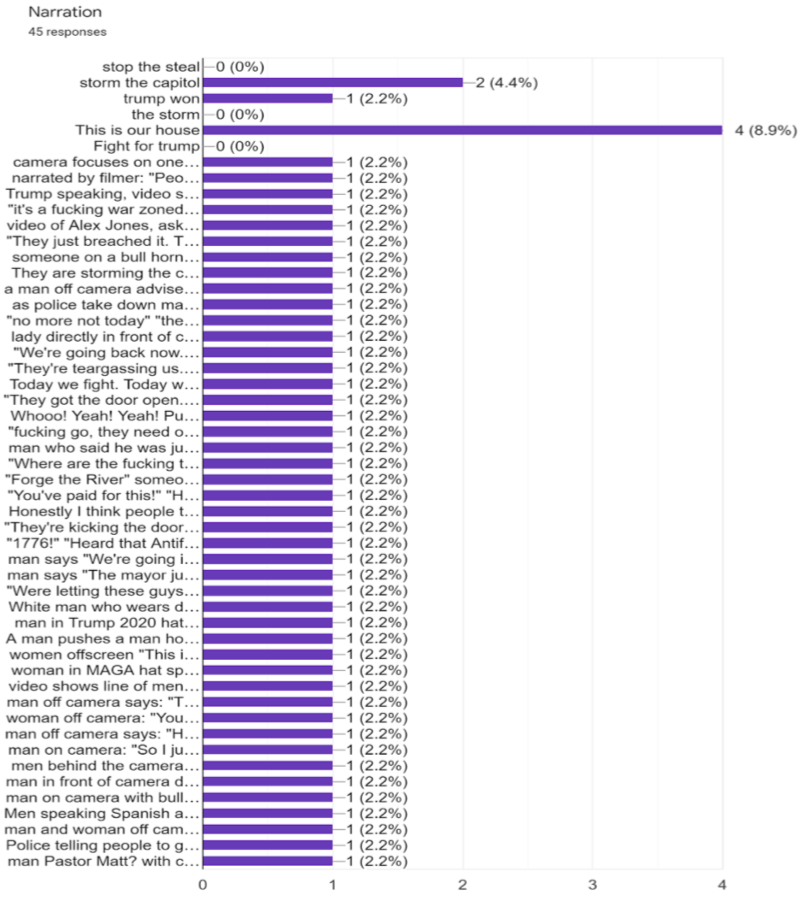
Discussion of Findings
While the above narrative based on the audio analysis does not include all the narrative events of the day, it is representative of the whole. The visual analysis is similar in that while a notation system was used to record the various images, it was not a comprehensive count of imagery. The hope was that this analysis is still useful in understanding how the physical spaces on January 6, 2021, intertwined and became one with the virtual spaces as participants actively recorded their and other’s participation in the events of that day, and how the ubiquitous use of imagery was a part of this process.
The findings from these analyses show that while some far right imagery was not as visible as in prior “stop the steal” related events, it was still present, particularly imagery related to far right movements QAnon, America First, Three Percenters, and Groypers (as those who fly the America First and follow far right leader Nick Fuentes refer to themselves). While the two high profile groups, Oath Keepers and Proud Boys, kept their imagery visibility low, their presence and planning at the event is known. The audio analysis supports this as phrases used by members of the crowd reflect trained and organized action. These include directions given such as “cover your face, let’s go,” “we need to have this area completely occupied, it’s an easy push forward,” “push forward,” and “fucking go, they need our help” (Groeger et al., 2021). These phrases stood out from other crowd exclamations like “Whoo,” “Hell yeah,” and those in the back of the crowd saying things like “they are storming the castle, they are going in, the patriots are storming the castle” (Groeger et al., 2021). The phrase “patriots” was used repeatedly to refer to people in the crowd engaged in attack or by people referring to themselves as patriots because of their participation that day.
The use of term patriot and the historical imagery often associated with it among the far right, including the Betsy Ross flag and the Gadsden flag, reflect the far right’s reverence for times before the current, more diverse era. It also represents the use of patriotic imagery to reaffirm the far right’s claim to the ethnonational homelands. It is impossible to discern those in the crowd who were “normie” Trump supporters, as they are called by the far right, and those who were far right actors, but both are known to use patriotic imagery. Some of the flags that day became weapons as videos show individuals using flag poles to break into the building and beat and push back law enforcement (Groeger et al., 2021).
The results of the analysis also reveal the tension between far right groups that support and contain members of law enforcement and those who harbor antigovernment sentiments. Crowd treatment of law enforcement was a theme that ran through many of the videos. Some participants implored the crowd to respect the police while the videos also clearly showed the police being attacked by the crowds (Groeger et al., 2021). In some videos the crowd can heard defending those that attacked and entered the building, telling the police to leave them alone and that they are “good people” (Groeger et al., 2021).
The most visible far right group on January 6, 2021, were those pushing the American First ideology. This group is led by Nick Fuentes, likely the young man speaking on the video. In his speech he referenced the far right theme of the great replacement. While he did not speak those words, the substance of his talk reflected the idea (Groeger et al., 2021, video 340). He spoke with a crowd around and in front of him, many wearing AF hats and holding AF flags. The crowd facing him was filled with individuals filming the talk, at least one of which was posted to social media as it was happening. This video represents to best example of how cyberspace, physical space, and imagery combined into one dynamic.
January 6, 2021 was only one event of many frequented by the far right just over the last year. The use of social media by the participants, both videos and textual posts, during the events of that day provide a window into how the far right uses imagery in both offline and online spaces, and how those two spaces come together. As evidenced by the results and discussion above, the cyber and physical space more than intertwined, they became on and the same on January 6, 2021 at the United States Capitol building.
Table of Contents
- CHAPTER ONE - INTRODUCTION
- CHAPTER TWO - LITERATURE REVIEW
- CHAPTER THREE - METHODS
- CHAPTER FOUR - FINDINGS
- CHAPTER FIVE - CONCLUSIONS AND RECOMMENDATIONS
- APPENDIX A - Google Form
- APPENDIX B - SPREADSHEET OF RESPONSES
- REFERENCES