- CHAPTER TWO: LITERATURE REVIEW
- Theoretical Frameworks Useful in Understanding the Far Right: Landscapes, the Imaginary, and Ecosystems
CHAPTER TWO: LITERATURE REVIEW
Introduction
In this chapter, research will focus first on theoretical frameworks to help understand the far right. Following the theoretical frameworks is a discussion of how cyberspace is utilized by the far right and how this helps with efforts at transnationalization. Then the use of imagery is explored, both the types of imagery and the mediums on which they are presented. The chapter concludes with a discussion of imagery and its role in facilitating interaction between cyber and real life spaces.
Theoretical Frameworks Useful in Understanding the Far Right: Landscapes, the Imaginary, and Ecosystems
Extremism research has concentrated on jihadist terrorism (Berger, 2018), however of late there has been increased focus on far right extremism (Baele et al., 2020). The rise of far right violence, the growth of the far right presence on the internet, and the growth and visibility of far right events in the real world— Charlottesville and Jan. 6, 2021—all likely have influenced the growth of academic research and the attention of journalists. Recent work (Belew, 2018) has shined the light on the fact that the far right, far from disappearing, has had a steady, if at times low profile, presence since at least the early 1980s. After Timothy McVeigh’s attack on the Edward P. Murrah building in Oklahoma City and the law enforcement takedown of The Order, far right groups in the United States primarily adopted a decentralized structure to prevent law enforcement infiltration and investigations (Belew, 2018). While to the general public—and perhaps law enforcement—this, plus the aftermath of September 11, 2001, directed attention away from far right extremists, the movement continued to grow. A major factor in the growth of the far right has been the internet. Far right white supremacists and white nationalists used the internet quite early, before the general public, to sustain and grow their ranks (Gerstenfeld et al., 2003). Another early goal was to create and maintain international links (Berlet, 2001; Gerstenfeld et al., 2003). As the internet transformed from basic sites to user generated sites like social media platforms, the far right moved right along with those changes, successfully creating a presence on mainstream sites like Facebook and Twitter as well as on more obscure spaces like “chans” and dedicated discussion forums (e.g., Iron March).
To aid in the analysis of the transnational and increasingly global movements of ideas and people of the far right, both in physical and virtual spaces, Anthropologist Arjun Appardurai’s (1996) conceptual framework of global landscapes is helpful. Appadurai (1996) theorizes five global “landscapes,” which he describes as “fluid, irregular” flows and “deeply perspectival constructs, inflected by historical, linguistic, and political situatedness of different sorts of actors’’ (p. 33). Among the five, ethnoscapes, technoscapes, financescapes, mediascapes, and ideoscapes, the last two are most relevant to this analysis of the far right. Mediascapes “refer both to the distribution of the electronic capabilities to produce and disseminate information” while ideoscapes are also concerned with images, they are political in nature “and frequently have to do with the ideologies of states and the counter ideologies of movements explicitly oriented at capturing state power or a piece of it” (Appadurai, 1996, pps. 35-36). The extreme far right’s ultimate goal is to capture state power and to rework society and create a white ethnostate. This framework allows for not only the discussion of the flows of ideas, but also for the instances where connections are lacking, which Appadurai (1996) labels as “disjunctures.” Among the far right the rhetoric is anti-globalist (Caiani & Kröll, 2015; Stern, 2019), however a disjuncture exists as they see the people of other places as the threat, as evidenced by the anti-Muslim, anti-refugee rhetoric, rather than the effects of late stage capitalism. Appadurai (1996) regards the scapes as the “building blocks’’ of the global imaginary. Working from Benedict Anderson’s (2006) theory the “imagined communities,” Appadurai (1996) writes that “the imagination has become an organized field of social practices, a form of work (in the sense of both labor and culturally organized practice) and a form of negotiation between sites of agency (individuals) and globally defined fields of possibility” (p. 31). The imaginary is a potent force for the far right (Miller-Idriss, 2020; Stern, 2019). The idealized past and the hoped for future exist simultaneously in the far right imagination, and it can be seen explicitly with the use of images that harken back to a mythical past (Miller-Idriss, 2020). The imaginary gives space for the expression of foundational issues, such as “territory, belonging, exclusion, race, and national geographies” (Miller-Idriss, 2020). The extreme right’s envisioned ethnostate is a powerful imaginary, with numerous written works laying out its creation, most notably William Luther Pierce’s The Turner Diaries. The far right imaginary as a building block of global mediascapes and ideoscapes implies disjuncture as it is a retreat from the global, an attempt at carving out a space that is homogenous among an increasingly diverse world. Today those spaces are online and offline in the form of specific events, while the future imagined ethnostate is a physical space, one that is being envisioned and discussed in online spaces in the present.
Place and space are important settings for the far right. Place is usually the ethnonationalist homeland that various far right movements claim based on their interpretation of history (Stern, 2019), and the physical site of the imagined ethnostate, but spaces offer so much more room for ideas and expression. Spaces are relational (Mazúr & Urbánek, 1983; Thrift, 2003) and filled by people and ideas, while the people and ideas are in return formed by spaces. As geographers Mazúr and Urbánek (1983) note, space is “‘filled’ with qualities given by interrelationships of elements of the landscape system and expressed by its structure” (p. 142). While not referring to Appadurai’s landscape framework, this notion fits well within the far right internet ecosystem as a landscape of ideas and images that inform and shape people and ideas, and in return the people continue to shape their spaces as a result of their interaction with far right spaces on the internet. Further, as evidenced by the proliferation of fringe social media sites developed to replace access for individuals and groups that have been deplatformed for hate speech or threats of violence (Scott, 2020), the structure of spaces of the far right are created to follow the demand of new spaces, to enable them to continue their flows of ideas and images.
Free spaces are places where groups like the far right can be themselves without the pressure from the dominant group (Polletta, 1999). White Power Movement researchers Pete Simi and Robert Futrell (2006) expanded on the idea of free spaces refined by Francesca Polletta (1999) to create a framework for analyzing these spaces in the far right White Power movement. The authors used a multi-method approach to collect ethnographic data between 1996 and 2005. Methods included 107 in-depth face to face and telephone interviews, participant observation of events, and content analysis of 48 websites and four internet forum groups (Simi & Futrell, 2006). They outlined three types of free spaces: home, event, and cyber (2006). Home is the main free space for the nurturing and continuation of the White Power movement (WPM) culture as this is where it is directly taught and reinforced through families, especially to their children. Events, particularly congresses, conferences and music festivals, represent larger scale free spaces, although because of the controversial nature of WPM beliefs, secrecy and use of private lands are essential to the success of these events. Cyberspace represents a free space that the authors argue is “intertwined” with real world free spaces (Simi & Futrell, 2006, p. 115), rather than comprising its own separate sphere. The authors describe several linkages between online spaces and real world spaces, including those that connect different WPM groups, create opportunities for continued activism and participation, facilitate logistical planning of events, report on real world events and “provide access to an array of WPM cultural items” (Simi & Futrell, 2006, p. 119). The authors further report that the largest real world events were those that had the most extensive online presence (Simi & Futrell, 2006, p. 134).
The Far Right’s online presence has grown considerably since Simi and Futrell’s work in the early 2000s (Conway et al., 2019). Today, the number of far right spaces on the internet makes a comprehensive mapping of the entire entity an unwieldy task. Rather, an analytical framework can help make sense of it. Baele, Brace, and Coan (2020) offer a useful one. The researchers describe the far right presence online as an “ecosystem’ (p. 2), an “entity made of an everchanging number of different components whose natures and interconnections are in constant evolution (as opposed to a static landscape made of a fixed number of well defined objects)” (p. 2). The authors further delineate the four levels of the far right ecosystem. At the simplest level are the “entities,” or individual domains, examples include blogs and Facebook group pages. “Communities” consist of “entities” that are linked: through hyperlinks, content flows, and user migration flows (p. 4). The “communities” are dynamic, both organically and strategically formed, and the “overall far-right ecosystem may thus be understood as a network made of a multitude of communities of linked entities” (p. 4). Communities can be organized by type into “biotopes,” and the authors adopt Davey et al.’s five suggested categories for the far right ecosystem: white supremacists, ethno-nationalists, militia-groups (antistate/government), the “manosphere,” and the alt-right (p. 4). Biotopes overlap and reflect the dynamic nature of the internet. Together the biotopes constitute the far right “ecosystem.” Internet culture is ever changing, and this creates difficulties in analysis, therefore this analytical framework is useful in creating a language for organization and analysis beyond what is currently relevant amongst the far right internet ecosystem, whether it be blogs that are popular or fringe social media sites that emerge after a deplatforming. In addition to offering this analytical framework, Baele et al. suggest a research agenda, as the rise in far right extremism has resulted in increased academic attention and given the dearth of previous research as compared to other types of extremism, particularly jihadist extremism.
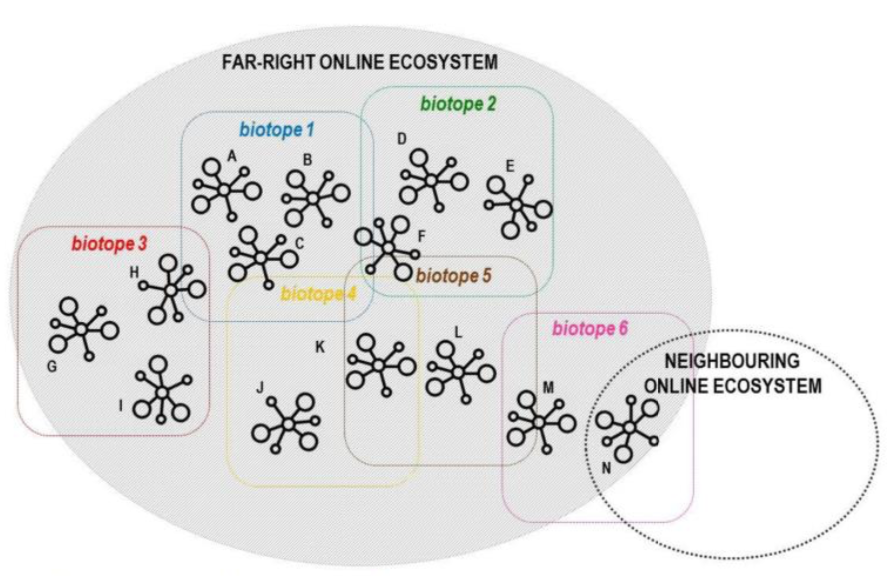
Figure. 1 Far-Right Online Ecosystem (Baele et al., 2020, p. 5)
Cyberspace and Growing Transnational Ties Among the Far Right
The far right uses the online ecosystem for the purposes of attracting new adherents, continuing engagement, fellowship, and coordination and the growing transnational nature of this landscape is reflected in all these areas of purpose. Since the early bulletin board systems of white nationalists in the US, the far right has utilized the internet to make transnational connections (ADL, 185; Berlet, 2001). Stormfront, the oldest major far right website, has sections labeled by country and numerous links to international far right websites (Bowman-Grieve, 2009). Recent research has found that the far right has used Twitter effectively to engage in transnational anti-immigrant and protectionist economic policy discourse (Froio & Ganesh, 2019). A recent leak from the web forum Iron March, now defunct, reveals major collaboration between far right individuals connected to Atomwaffen. Iron March grew out an earlier version called International Third Position Forum, which “was launched by a Russian, produced a terror group in the U.S., and facilitated coordination among terror groupings in the U.K. and elsewhere, all through the power of the internet” (Ross et al., 2019). Extremism researchers Manuela Caiani and Patricia Kröll (2015) investigated “the degree and forms of extreme far right transnationalization (in terms of mobilization, issues, targets, action strategies, and organizational contacts) and the potential role of the internet in these developments’’ (p. 331). The research involved interviews with 54 representatives of six right wing organizations within Europe and the United States in addition to conducting a formalized web content analysis of 336 far right websites. They found that while most far right actions take place at the local level, the transnational landscape is growing, widespread and that the internet is assisting this process in three ways: increasing supranational targets, giving opportunity to “stage supranational organization,” and the creation of new transnational organizations (p. 343). The far right in the United States is the most transnationalized, however a particularly close relationship between the British and French far right exists which is constituted by both online and offline spaces, and in Germany the far right actors which most used the web were also most effective in “staging transnational activities’’ (p. 343). The internet is used as a tool, both on the local and transnational level, to “attract new members…propagate their ideals among like-minded people, and connect individuals and organizations’’ (p. 343).
Connections built online lead to real world transnational meetings. In the past, music festivals, particularly in Europe, were popular far right events that would draw an audience from overseas (Yousef, 2020). Recently, Mixed Martial Arts (MMA) events hosted by far right individuals in Europe also tend to draw international participants (Miller-Idriss, 2020). Far right actors from the United States have trained in the Ukraine (Rotella, 2021). Far right politicians in Europe are also engaging in transnational connections. In 2019, a group of 23, of whom most were from far right political parties, visited Kashmir, the site of contested land between India and Pakistan (Leidig, 2020, January 21). Far right connections between North America and Europe have existed for decades, it appears these connections are growing, in addition to branching out in solidarity with more far flung countries, as with India.
The Role of Imagery
Language is an obstacle for transnational communication. The far right’s use of imagery is one way to overcome this block. In Europe, far right imagery in the form of a cartoon was effective in spreading messaging across language barriers (Doerr, 2017). Researcher Nicole Doerr analyzed anti-immigrant cartoons originally produced in Switzerland, and how those images were understood and transferred to audiences in Germany and Italy to show a sense of anti-immigrant solidarity between the far right of those nations (Doerr, 2017).
Far right imagery is prevalent and prominent in both online and offline spaces. Online mostly in the form of memes and offline on flags, t-shirts, stickers, patches, pins, and even tattoos. Most far right memes are created in the anonymous “chans” and then flow through other online entities as users visit other online far right spaces and share them (Baele et al., 2020). Many of the memes include imagery that is created by ever changing internet culture, for example the Boogaloo Bois preference for igloos and Hawaiian shirts. Neither igloos nor Hawaiian shirts have any historic tie to far right ideology or symbolism. Some memes have staying power, most significantly Pepe the Frog, an early internet meme that was appropriated by the far right, and the Red Pill memes, signifying an awakening to the far right cause, which originated from the Matrix movie series (Stern, 2021). The origins of some far right imagery, like Nazi and Confederate symbols, are historic and predate the internet. This imagery has become less visible, however, since many among the far right realize that the extreme nature of these symbols might turn away potential adherents who might need a softer, less controversial entry into the far right (Stern, 2019). The far right is reaching even further into the past to use Norse and Celtic imagery as symbolic of white European civilization and their perceived need to preserve and protect it (Miller-Idriss, 2020). This imagery appears in both Europe and North America. These images have made their way into contemporary online spaces, as well as being a staple on physical items like t-shirts and flags. Online stores have flourished, and the quality of the merchandise has improved. In the past, shirts were often screen printed and of low quality. Today over a dozen high quality, far right clothing brands exist, sold on sophisticated websites that include currency converters for international customers (Miller-Idriss, 2020). There is also evidence of transnational solidarity in this arena: a Polish website sell shirts emblazoned with the Confederate flag, while in Russia images of Germanic history like Vikings are popular (Miller-Idriss, 2020). In the U.S., the Proud Boys and Oath Keepers both have high quality, original clothing and imagery. Public events and protests throughout 2020 featured both groups present in gear that was easily recognizable and highly visible.
In the United States, support among the far right for former President Donald Trump is strong and pro Trump flags, shirts, and hats are ubiquitous at rallies and events frequented by the far right, as are American flags, American historical flags and symbols. Researcher Cynthia Miller-Idriss writes:
Hate clothing celebrates violence in the name of a cause—often using patriotic images and phrases and calls to act like an American, along with Islamophobic, anti-Semitic, and white-supremacist messages. In this way, far-right clothing links patriotism with violence and xenophobia. (2020, p. 80)
While it is likely impossible to determine if someone wearing American patriotic gear is a member or sympathizer of the far right, the far right does use American patriotic imagery (Miller-Idriss, 2020).
Summary
The far right can be better understood by applying theoretical frameworks from the social sciences. It is not a monolithic set of groups and actors, rather a large movement tied together by various far right ideologies. International ties were undertaken early using the power of the internet, and research shows these ties are growing and even branching out from the western world. The presence of the far right on the internet is both historical and of contemporary concern. The goal of this study is to add to the discussion of how online spaces are used together with physical spaces and the role of imagery in facilitating those processes. While Simi and Futrell found that far right cyber and real world spaces are “intertwined” (2006), there is a lack of research regarding the role of imagery in this process. Miller-Idriss contends, “that symbols and iconography move between online and offline spaces as they are deployed and co-opted by the far right in ways that deserve our close attention” (Miller-Idriss, 2020, p. 133). She suggests, “more empirical research is needed to disentangle variations in the utility of symbols in offline and online spaces for insider and outsider recognition, communication of far-right messages, and the degree of commitment they require to far right ideas” (Miller-Idriss, 2020, p. 133). The visual and audio analysis in the next chapter is an attempt to help understand how imagery was used on the events of January 6, 2021, at the U.S. Capitol where both offline and online spaces were used by the far right.
Table of Contents
- CHAPTER ONE - INTRODUCTION
- CHAPTER TWO - LITERATURE REVIEW
- CHAPTER THREE - METHODS
- CHAPTER FOUR - FINDINGS
- CHAPTER FIVE - CONCLUSIONS AND RECOMMENDATIONS
- APPENDIX A - Google Form
- APPENDIX B - SPREADSHEET OF RESPONSES
- REFERENCES