4 HUMAN CENTRED DESIGN
Most technology lifecycle models involve a user requirements phase, for example the incorporation of use cases as part of purpose and process specifications within a practical IoT design methodology (Bahga and Madisetti, 2021). However it can be difficult to capture the complex requirements involved in designing home-based smart technology for older adults and people with disabilities without involving them directly in the process.
Human-centred participatory approaches to technology that involve end users at every stage of the design process from requirements gathering to prototype design and iterative development are not novel. Design thinking, first proposed in 1969 (Simon, 1969) as a three step process is most commonly applied to technology using the five stage user centred, iterative design model developed by the Hasso-Plattner Institute of Design at Stanford University (see figure 2)
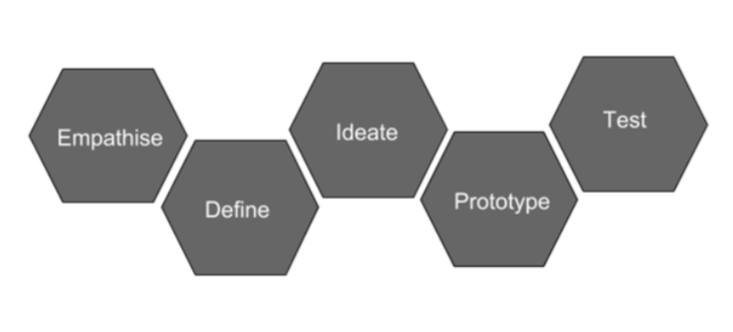 Figure 2 Five stages of Design Thinking (Plattner, 2010)
However, we need to acknowledge that even when a user-centred approach such as design thinking is adopted, designs can still be technology-led or driven by researchers rather than end users (Rogers and Marsden, 2013) due to practical constraints such as meeting requirements of funders or commercial technology partners involved in the design. The tensions between the requirements of relevant stakeholders and a genuine user centred approach are important to acknowledge for a holistic ethical approach to design.
There are multiple stakeholders involved in the creation, implementation and deployment of home-based smart technology for health and wellbeing. Social models of research and care for older adults and people with disabilities have progressed participatory approaches to technology design and have led to more inclusive approaches to the entire research process. There is a growing body of research exploring ethnographic methodologies for a co-researcher approach in the areas of developing age-friendly concepts, (Buffel, 2015; Egan et al., 2014) and disability research (Cappelen, and Andersson, 2021). Rather than passively taking part in a task or design phase, research participants can be viewed as partners in the entire research lifecycle, with a focus on conceptual issues of identity, participation and support networks (Caroll, 2013). It should be acknowledged that some applications of participatory approaches to technology design have been critiqued as a narrow interpretation of ethnographic methods as a requirements gathering exercise and have ignored core insights of ethnographic inquiry, such as the relationship between researcher and subject (Dourish, 2006). An honest understanding of the relationship is crucial to being able to evaluate ethical risk through the entire design lifecycle.
A further criticism of Human Centred Design has been the perception that latest technology advancements may not be utilised with a user driven approach (Norman, 2005). This critique highlights the need to involve multistakeholder design teams that involve technology experts co-designing with end users so that technological capabilities are well matched to user needs. The use of iterative prototyping models used in Design Thinking also complement this form of multistakeholder design approach and can lead to state-of-the-art IoT environments that consider spatial configuration by using human-centric proxemic interactions (Calderon, et al., 2016).
Table of Contents
- 1 INTRODUCTION
- 2 HOME-BASED SMART TECHNOLOGY
- 3 ETHICS AND TECHNOLOGY
- 4 HUMAN CENTRED DESIGN
- 5 PERSONAS AND ETHICS
- 6 PROPOSED 5D FRAMEWORK
- 7 CONCLUSIONS
- ACKNOWLEDGEMENTS
- REFERENCES
- APPENDIX